Singapore VPS Use Cases for Websites, Apps & VPNs
Singapore VPS Use Cases: What It’s Best For
A Singapore VPS is useful when your website, app, or online tool needs a server location close to Singapore and Southeast Asia. It gives you more control than shared hosting, more flexibility than a fixed hosting plan, and a better regional fit for users in countries such as Singapore, Malaysia, Indonesia, Thailand, Vietnam, and the Philippines.
The main reason people choose a Singapore VPS is not only speed. It is control. You can install your own software, choose Linux or Windows, configure security, host multiple projects, run databases, manage APIs, set up remote desktop access, or create a private VPN.
For many website owners, developers, agencies, and small businesses, Singapore VPS hosting is a practical middle ground. It is more powerful than shared hosting, but still easier and more affordable than managing a full dedicated server.
TL;DR
A Singapore VPS is best for projects that need dedicated server resources, full control, and better access for users in Singapore or Southeast Asia. It can be used for WordPress, WooCommerce, business websites, SaaS apps, APIs, remote desktop, VPNs, agency hosting, development environments, databases, and internal business tools.
If your project serves users in Southeast Asia, you can review AwakeHost Singapore VPS hosting to compare available VPS options. For broader server choices, you can also visit the main AwakeHost VPS hosting page.
What Is a Singapore VPS?
A Singapore VPS is a virtual private server hosted in a Singapore-based or Singapore-focused server location. It gives you allocated CPU, RAM, storage, bandwidth, and operating system access inside a private server environment.
Unlike shared hosting, where many users depend on the same shared server limits, a VPS gives you more control. You can install custom software, manage server settings, configure firewall rules, run websites, host apps, and scale resources as your project grows.
In simple terms, a Singapore VPS is useful when you want a server that is closer to Southeast Asian users and flexible enough for serious hosting tasks.
Why Singapore VPS Hosting Makes Sense
Singapore is a strong VPS location for websites and applications that serve Southeast Asia. If your visitors or users are mostly in Singapore, Malaysia, Indonesia, Thailand, Vietnam, or the Philippines, hosting your server in Singapore can reduce the distance between the user and the server.
That distance matters because many websites are not fully static. A CDN can help with images, CSS, JavaScript, and cached pages, but logins, checkout pages, admin dashboards, APIs, databases, and remote desktop sessions still depend on the main server.
A Singapore VPS can make those dynamic actions feel more responsive for nearby users. This is especially useful for business websites, eCommerce stores, SaaS dashboards, booking systems, WordPress admin panels, and remote work setups.
1. Business Websites Targeting Singapore or Southeast Asia
One of the most practical uses of a Singapore VPS is business website hosting. If your company serves customers in Singapore or nearby countries, your website should feel fast, stable, and reliable for those users.
A business website often does more than show basic information. It may include contact forms, quote forms, booking systems, customer login areas, payment pages, live chat, landing pages, and tracking scripts. These features need a stable hosting environment.
Shared hosting may work for a small website at the beginning. But when your website becomes important for leads, sales, or customer trust, a VPS gives you more control over speed, security, caching, and server resources.
A Singapore VPS is suitable for service businesses, agencies, consultants, schools, clinics, real estate websites, finance-related websites, local directories, and professional company websites that serve Southeast Asian users.
2. WordPress Websites That Need More Control
WordPress can run on shared hosting, but not every WordPress site should stay there. As a site grows, it may need more memory, better caching, stronger database performance, and more control over PHP settings.
A Linux VPS in Singapore is a good option for WordPress websites targeting Singapore or Southeast Asia. It lets you control PHP versions, memory limits, database settings, caching layers, SSL certificates, cron jobs, and security rules.
This is useful for WordPress websites using page builders, WooCommerce, membership plugins, booking plugins, LMS plugins, multilingual content, or large media libraries. These websites often become heavy over time, and shared hosting may struggle to keep them smooth.
With a VPS, you can build the hosting environment around the website instead of forcing the website to work inside strict shared hosting limits.
3. WooCommerce and Online Stores
WooCommerce stores need more server power than normal blogs. The cart, checkout, customer account pages, product filters, coupons, order management, and payment callbacks are dynamic. They need real-time server processing.
A Singapore VPS can be useful for online stores selling to customers in Singapore, Malaysia, Indonesia, Thailand, Vietnam, or nearby markets. It gives the store dedicated resources and more control over caching, database performance, PHP settings, and security.
This matters because eCommerce performance directly affects trust. If checkout is slow or the site feels unstable, customers may leave before completing the order.
For WooCommerce, the smallest VPS plan is not always the best choice. Stores with many products, plugins, variations, or regular traffic should use enough CPU, RAM, and fast SSD or NVMe storage. A VPS should give the store room to work, not just barely enough resources to stay online.
4. SaaS Apps and Customer Dashboards
A Singapore VPS can be a good starting point for SaaS platforms, customer dashboards, booking systems, CRM tools, and web applications.
Developers can use a VPS to run Node.js, Laravel, Django, Flask, Next.js, PostgreSQL, MySQL, MariaDB, Redis, background workers, queues, cron jobs, and API services. This gives more freedom than shared hosting and can be simpler than using a complex cloud setup at the early stage.
For SaaS apps, server response matters because users are constantly interacting with dashboards, forms, reports, tables, login pages, and account settings. If your users are in Southeast Asia, a Singapore VPS can help keep the application closer to them.
A VPS is also useful when you want to control deployment, server logs, environment variables, firewall rules, database access, and application services in one place.
5. APIs and Backend Services
Many modern websites and mobile apps depend on APIs. These APIs handle user accounts, payments, product data, search, notifications, reports, authentication, and integrations.
A Singapore VPS can host REST APIs, GraphQL APIs, webhook processors, backend services, database connections, and background jobs. This is useful when your app’s users are mainly in Singapore or Southeast Asia.
For API hosting, even small delays can affect the full app experience. If the backend responds slowly, the frontend feels slow too. This is why server location, CPU power, memory, and database performance all matter.
A VPS gives developers the ability to configure the stack properly. You can use HTTPS, firewall rules, logging, monitoring, rate limits, and secure environment configuration. This makes it a stronger choice than shared hosting for serious backend work.
6. Windows Remote Desktop
A Windows VPS in Singapore can be used as a remote desktop server. This is useful when you need a Windows machine that stays online and can be accessed from different devices.
Remote desktop is commonly used for browser-based work, Windows software, testing tools, lightweight office tasks, file management, admin work, and business applications that need a stable online system.
Location matters for remote desktop because the user interacts with the server in real time. If the VPS is too far away, typing, mouse movement, and screen refresh can feel delayed. For users in Singapore or nearby countries, a Singapore Windows VPS can feel more responsive than a distant server.
Windows usually needs more RAM than Linux. For light use, 4 GB RAM may work. For smoother remote desktop usage, 8 GB RAM or more is usually better, especially if you run browsers or multiple apps.
7. Private VPN Server
A Singapore VPS can also be used to set up a private VPN server. This is useful when you want more control than a public VPN service gives you.
With your own VPS-based VPN, you control the server, software, users, access rules, and configuration. Common tools include WireGuard and OpenVPN.
A private VPN on a Singapore VPS can help with secure remote access, team connectivity, encrypted browsing through your own server, private access to internal tools, or testing websites from a Singapore-based server endpoint.
This setup should be handled carefully. A VPN server must be secured, updated, and used responsibly. You should configure firewall rules, use strong authentication, and follow the provider’s terms and applicable laws.
8. Agency Hosting for Client Websites
Agencies and freelancers can use a Singapore VPS to host client websites, especially when those clients target Singapore or Southeast Asia.
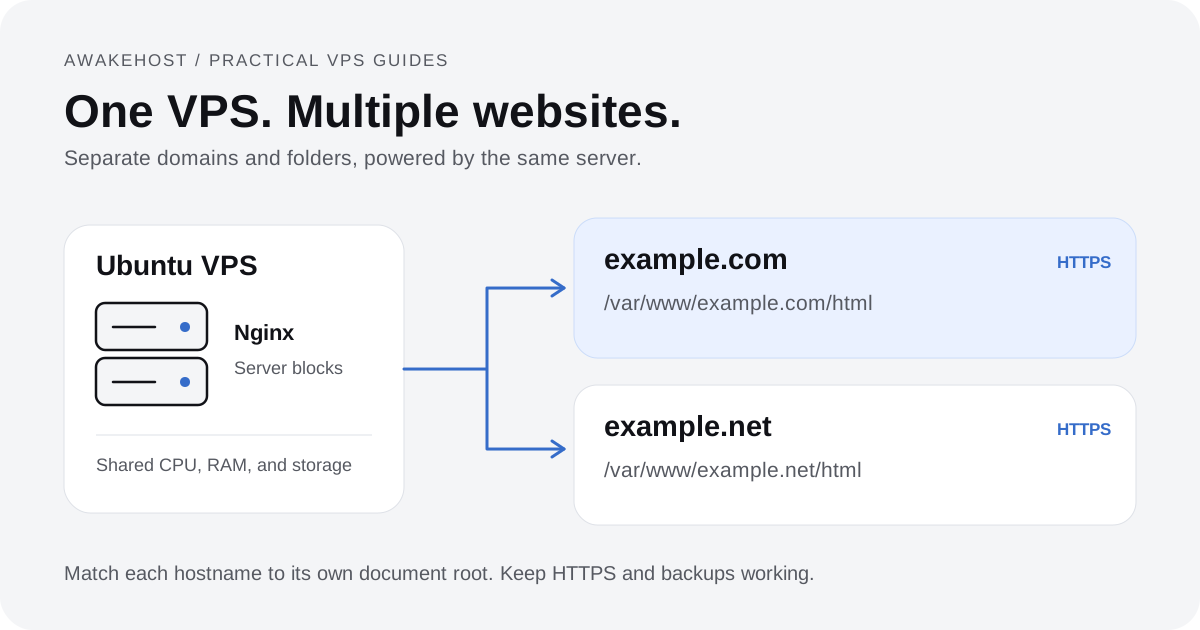
Instead of managing many separate shared hosting accounts, an agency can use one VPS with a hosting control panel to manage multiple websites. This can make it easier to handle SSL certificates, databases, backups, staging sites, PHP versions, and performance settings.
A Singapore VPS can work well for local business websites, WordPress sites, SEO landing pages, small WooCommerce stores, portfolio sites, and client portals.
The key is not to overload the server. If too many websites are placed on one VPS without enough resources, performance can become poor. Agencies should monitor CPU, RAM, storage, bandwidth, backup size, and traffic patterns regularly.
Used properly, a VPS gives agencies more control and consistency than basic shared hosting.
9. Development and Staging Environments
A VPS is useful for developers who need a real server environment for testing. Local development is helpful, but it does not always show how a project will behave after deployment.
A Singapore VPS can be used for staging websites, testing app updates, running deployment scripts, checking APIs, testing server configurations, preparing client previews, and experimenting with new frameworks.
For WordPress, staging is especially valuable. You can test plugin updates, theme changes, PHP version changes, and WooCommerce updates before touching the live website.
For projects targeting Southeast Asia, a Singapore-based staging server can also help you test performance from a location closer to your final users.
10. Internal Business Tools
Many businesses use private tools that are not meant for public visitors. These can include CRM systems, inventory dashboards, reporting panels, private documentation, file managers, automation tools, staff portals, and lightweight ERP systems.
A Singapore VPS can host these tools when your team is based in Singapore or nearby regions. It gives you control over access, software, storage, backups, and security.
For internal tools, security is more important than design. You should restrict access, use strong passwords or SSH keys, configure firewall rules, keep the operating system updated, and maintain off-server backups.
If the tool stores customer records, financial data, employee information, or sensitive business data, you should also consider privacy and compliance requirements. A VPS gives infrastructure control, but safe data handling is still your responsibility.
11. Database Hosting for Small and Medium Projects
A Singapore VPS can host databases such as MySQL, MariaDB, PostgreSQL, MongoDB, or Redis, depending on your application.
For small and medium projects, keeping the database on the same VPS as the app can be simple and cost-effective. For larger projects, it may be better to separate the database from the application server.
Database performance depends on RAM, storage speed, query quality, indexing, and backup strategy. Fast SSD or NVMe storage is important for database-heavy websites and applications.
Databases also need reliable backups. Losing a database can mean losing orders, users, content, settings, customer records, or application data. For important projects, keep database backups outside the VPS as well.
12. Regional SEO and Landing Pages
A Singapore VPS can support websites built for Singapore or Southeast Asian search visibility. This includes local service pages, niche blogs, business websites, directories, multilingual sites, and regional landing pages.
Server location alone will not make a page rank. Search engines look at content quality, search intent, topical relevance, technical SEO, user experience, internal links, backlinks, and trust signals.
But fast regional hosting can support better user experience. If your visitors are in Southeast Asia, a Singapore VPS can help your site respond faster for that audience, especially when the website uses dynamic features.
For SEO projects, a VPS also gives more control over redirects, caching, SSL, schema markup, server response, and site structure. That control can be helpful when you are building a serious content or lead generation project.
13. Bots, Communities, and Lightweight Game Servers
A Singapore VPS can also be used for bots, small game servers, forums, voice tools, community dashboards, and status pages.
This use case is especially relevant when your community or players are in Singapore or Southeast Asia. Real-time systems are more sensitive to latency than normal websites, so server location can make a noticeable difference.
Examples include Discord bots, private game servers, community forums, voice servers, monitoring dashboards, and small multiplayer tools.
Before using a VPS for gaming or bots, check the CPU, RAM, bandwidth, port rules, and provider terms. Some workloads are lightweight, while others need more server power than expected.
When a Singapore VPS Is the Right Choice
A Singapore VPS is the right choice when your project needs more control than shared hosting and your audience is close to Singapore.
It makes sense for WordPress, WooCommerce, business websites, SaaS apps, APIs, remote desktop, VPNs, agencies, development servers, internal tools, databases, and regional SEO projects.
It is also a good fit when you need Linux or Windows access, dedicated VPS resources, and the ability to configure the server based on your own needs.
The strongest reason to choose Singapore VPS hosting is the combination of location, control, and flexibility.
When a Singapore VPS May Not Be the Best Fit
A Singapore VPS may not be necessary if you only need a small static website with very low traffic. In that case, shared hosting or static hosting may be enough.
It may also not be the best location if most of your users are in Europe, North America, the Middle East, or Australia. The best VPS location is usually the one closest to your main audience.
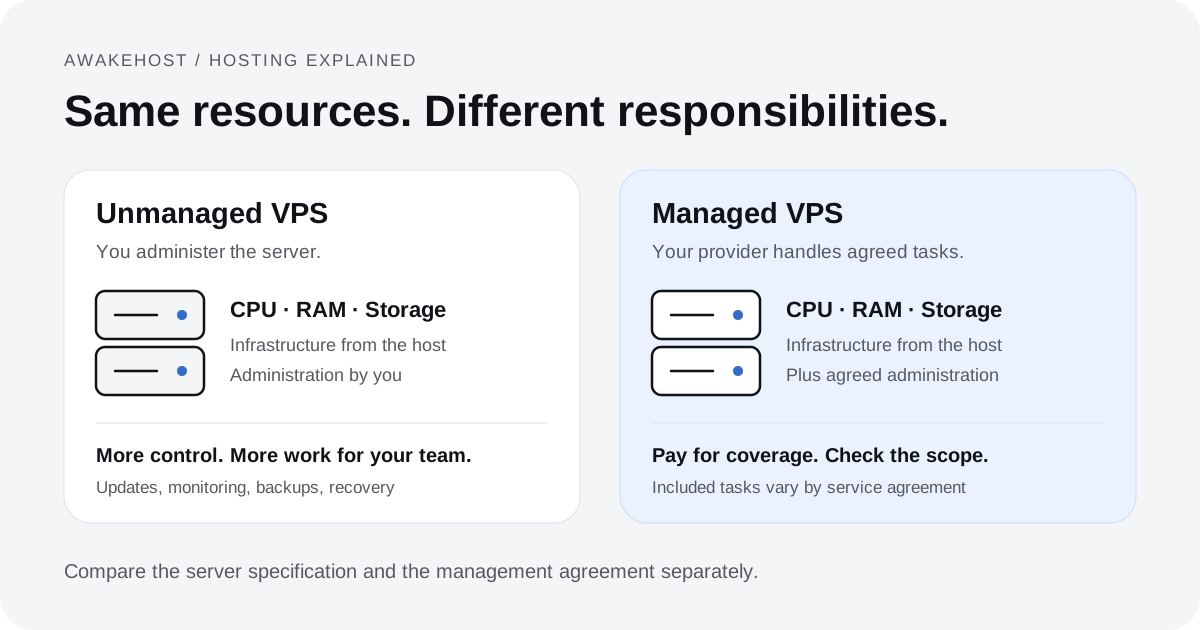
You should also avoid unmanaged VPS hosting if you do not want to handle server updates, backups, firewall rules, security hardening, and troubleshooting. A VPS gives you more power, but it also gives you more responsibility.
AwakeHost Singapore VPS Overview
AwakeHost provides VPS hosting options for users who need dedicated resources, full server control, and flexible operating system choices. For projects focused on Singapore or Southeast Asia, the AwakeHost Singapore VPS page is the main place to review available plans and features.
A Singapore VPS can be used for WordPress, WooCommerce, business websites, remote desktop, private VPNs, SaaS apps, APIs, databases, agency hosting, staging environments, and internal business tools.
For broader hosting options, you can also explore the main AwakeHost VPS hosting page.
The right plan depends on the workload. A simple website, a Windows remote desktop, and a SaaS app all need different resources.
Final Thoughts
A Singapore VPS is useful for more than basic website hosting. It can become the foundation for websites, online stores, apps, APIs, remote desktop systems, VPNs, agency hosting, databases, staging servers, and private business tools.
Its main value is the mix of regional access and server control. If your users are in Singapore or Southeast Asia, the location can support better response times. If your project needs custom software, root access, dedicated resources, or stronger configuration control, VPS hosting gives you more flexibility than shared hosting.
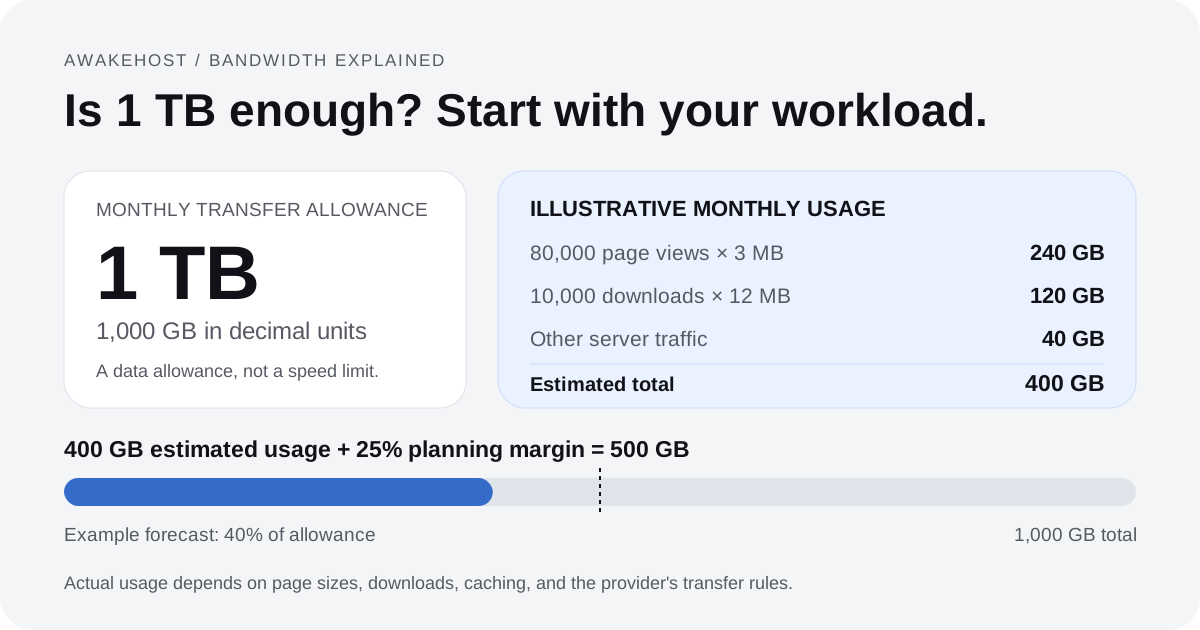
Before choosing a plan, think about your audience, operating system, CPU, RAM, storage, bandwidth, backups, security, support, and upgrade path.
For Singapore-focused hosting needs, you can review AwakeHost Singapore VPS hosting and choose a plan based on your project requirements.
FAQs
What can I use a Singapore VPS for?
You can use a Singapore VPS for WordPress, WooCommerce, business websites, SaaS apps, APIs, remote desktop, private VPNs, databases, agency hosting, development servers, bots, internal tools, and regional SEO projects.
Is a Singapore VPS good for Southeast Asian users?
Yes, a Singapore VPS can be a good option for users in Singapore, Malaysia, Indonesia, Thailand, Vietnam, the Philippines, and nearby regions because the server location is closer to many Southeast Asian audiences.
Can I host WordPress on a Singapore VPS?
Yes, WordPress can run well on a Singapore VPS if the server has enough CPU, RAM, and fast storage. A VPS also gives more control over PHP settings, caching, security, backups, and database performance.
Is Singapore VPS good for WooCommerce?
Yes, a Singapore VPS can be useful for WooCommerce stores targeting Singapore or Southeast Asia. WooCommerce uses dynamic pages like cart, checkout, customer accounts, and order management, so dedicated resources can help.
Can I use a Singapore VPS for remote desktop?
Yes, you can use a Windows VPS in Singapore for Remote Desktop access. It is useful for remote work, Windows software, browser tasks, testing, and business tools that need an always-online server.
Can I set up a VPN on a Singapore VPS?
Yes, you can set up a private VPN on a Singapore VPS using tools such as WireGuard or OpenVPN. The server should be secured, updated, and used according to provider terms and applicable laws.
Is Singapore VPS better than shared hosting?
Singapore VPS hosting is better than shared hosting when you need dedicated resources, full server access, custom software, stronger isolation, and more control over performance and security.
Should I choose Linux or Windows VPS in Singapore?
Choose Linux VPS for websites, WordPress, PHP apps, APIs, databases, and most hosting tasks. Choose Windows VPS if you need Remote Desktop, Windows-only software, ASP.NET, Microsoft SQL Server, or desktop-style access.
Can agencies use Singapore VPS hosting?
Yes, agencies can use a Singapore VPS to host client websites, staging sites, landing pages, WordPress projects, and small eCommerce stores. The key is to monitor resources and avoid overloading the server.
When should I not choose a Singapore VPS?
You may not need a Singapore VPS if most of your users are outside Asia, if you only need a small static website, or if you do not want to manage server updates, backups, firewall rules, and security settings.